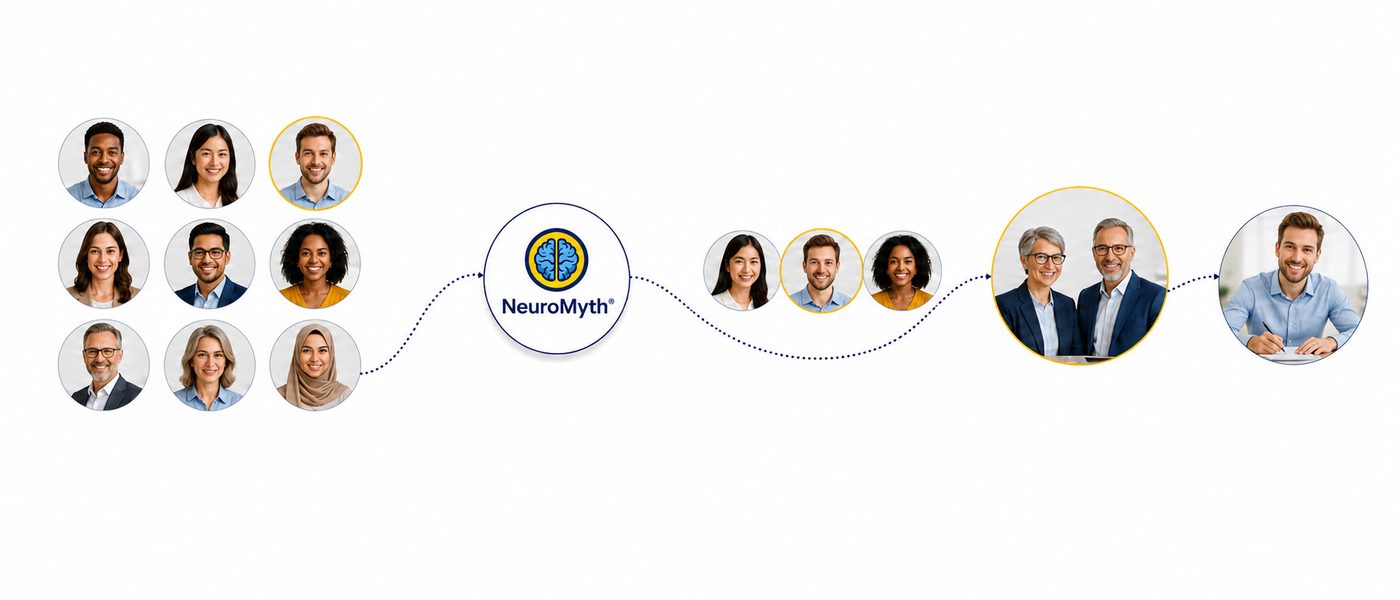
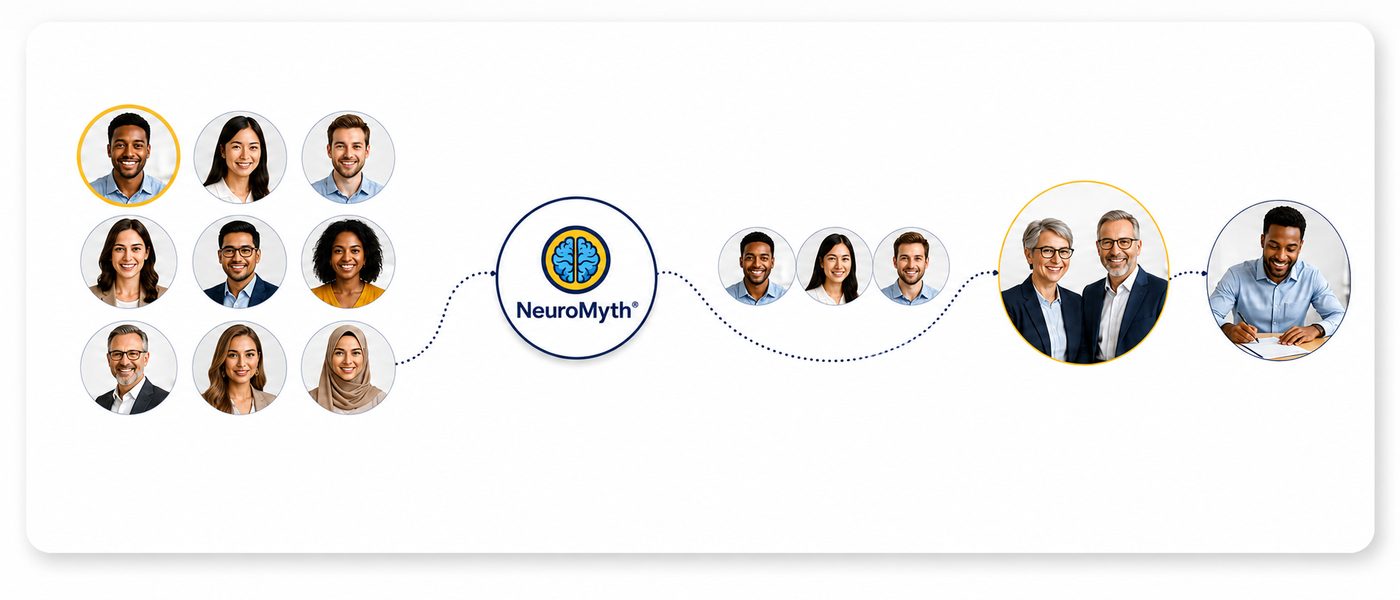
Leadership team composition is one of the highest-leverage decisions an organisation makes — and one of the least rigorously assessed. NeuroMyth gives you a structured behavioural map of the people who will shape your culture, before the decisions are made.
Diverse titles, similar decision styles. Complementary functions, identical risk tolerances. The gaps that create organisational fragility are often invisible until a crisis surfaces them.
A leadership team where everyone defaults to the same decision-making pattern moves fast in one direction — and has no internal check on that direction. Homogeneity looks like alignment. It can be fragility.
Two leaders with different primary motivational vectors will systematically prioritise different things — without either being wrong. Without a map of those differences, the organisation experiences the conflict as dysfunction rather than structural tension.
Every leadership profile has a shadow — the behavioural tendency that becomes a risk when the environment changes, authority is challenged, or resources are constrained. Knowing these patterns in advance is not a luxury at leadership level.
The ELI report — the deepest level — is designed precisely for this context. One 30-minute narrative assessment per person. A full behavioural architecture for each, plus a comparative expert note across the team.
What structurally drives each leader — the primary motivational pattern that shapes their priorities, their tolerance for ambiguity, and what they will sacrifice to preserve. Visible before it becomes a conflict.
ELI sectionHow each person leads — the structural pattern of authority, influence, and delegation that characterises their approach to the people around them. Not self-reported. Not curated. Extracted from the narrative.
ELI sectionThe behavioural tendency that becomes a risk under structural pressure. Documented before the crisis — so the organisation can build in the safeguards, the peer checks, or the support structures that reduce the exposure.
ELI sectionWhen assembling a leadership team from scratch — a new division, a post-merger structure, a start-up scaling into management — NeuroMyth provides the behavioural complementarity map before the team's culture is established. Design the composition; don't discover it later.
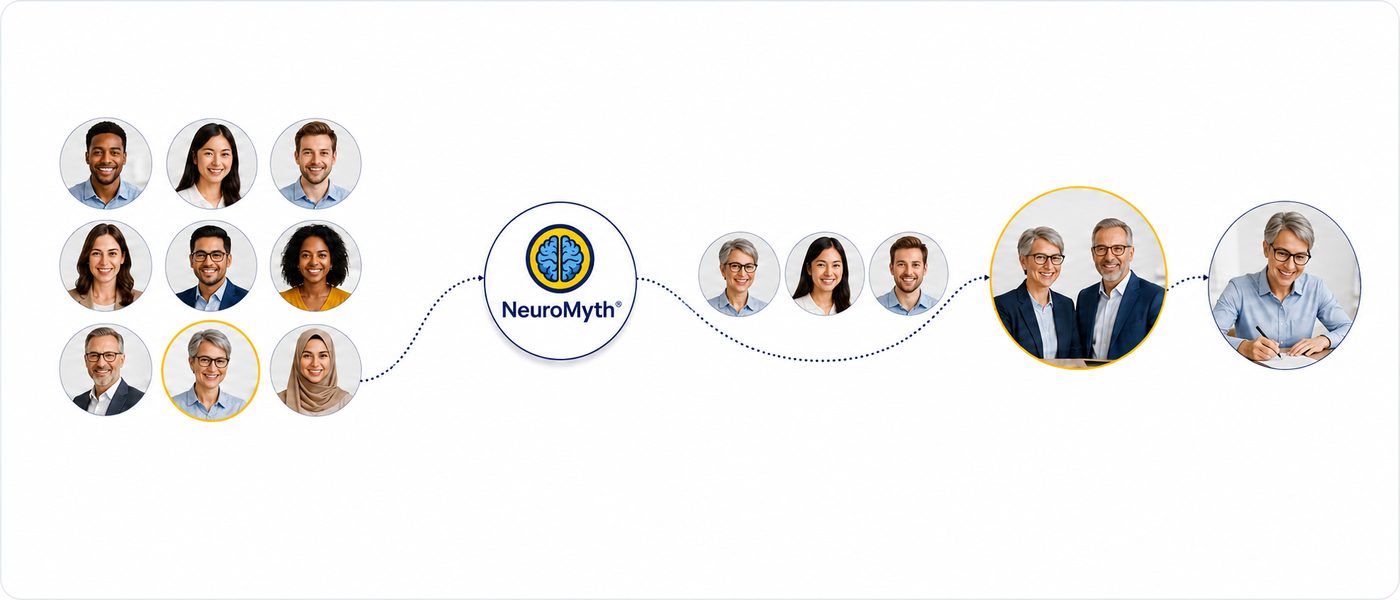
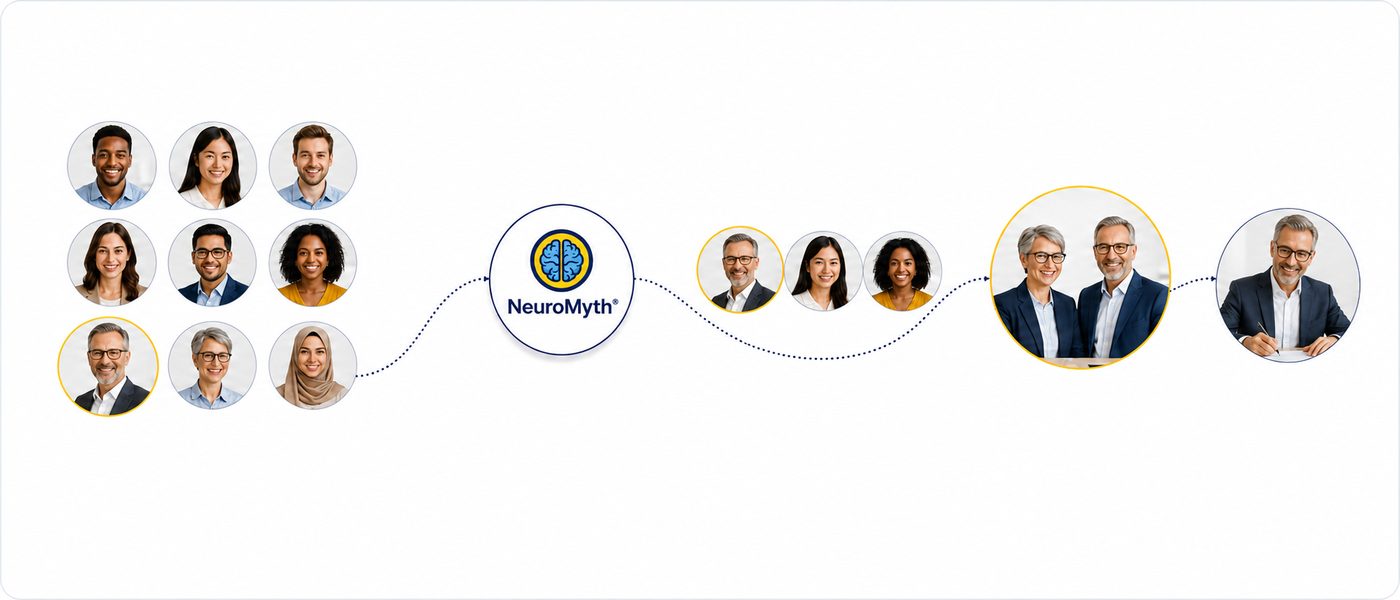
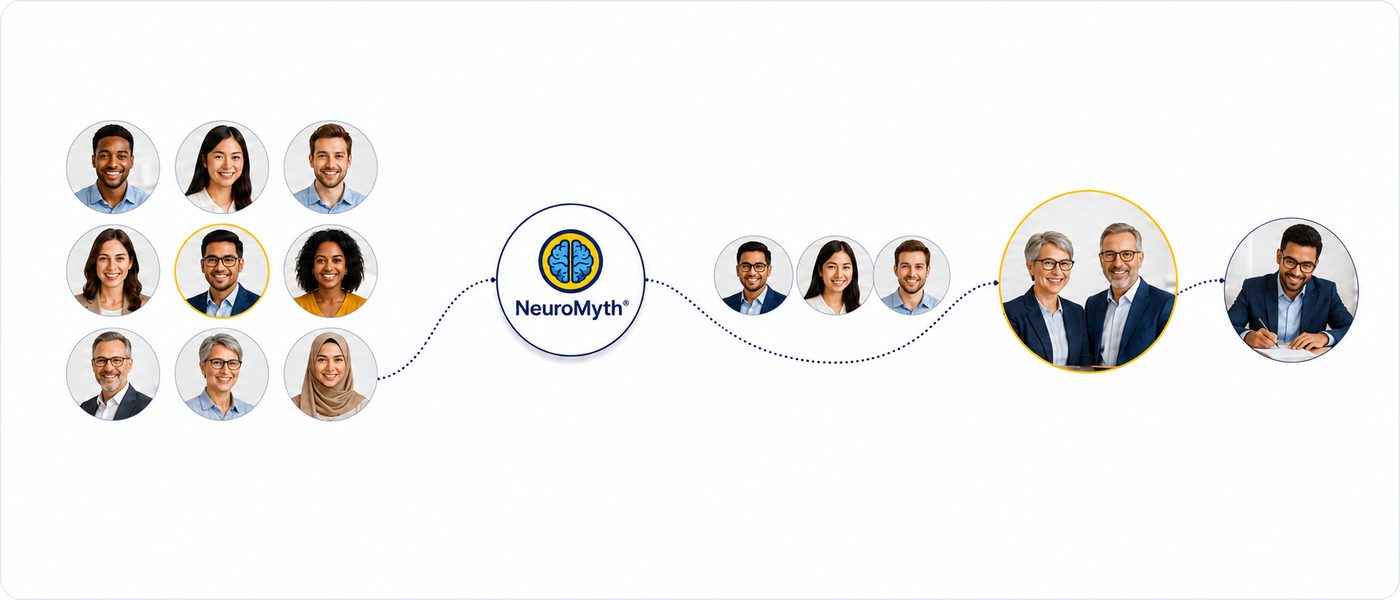
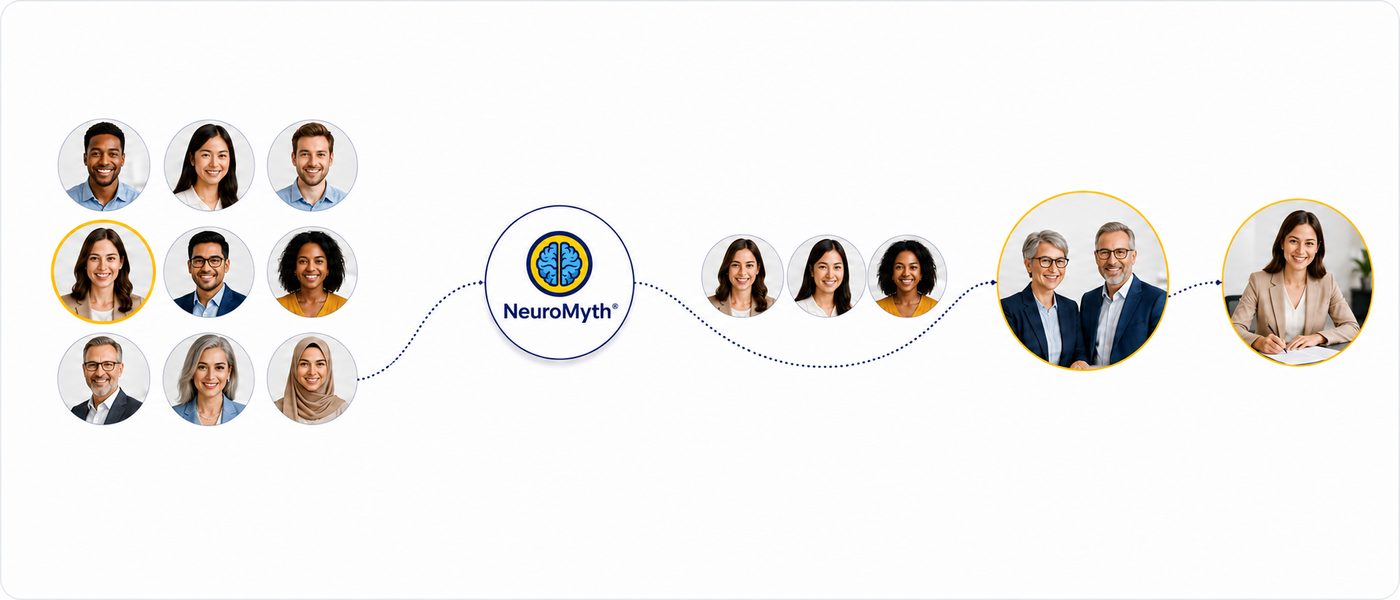
When one seat changes, the whole team changes. NeuroMyth profiles both the candidate and the existing team members, giving the decision-maker a structured view of how the new profile will interact with what's already there — before the appointment is made.
When a leadership team is underperforming and the reason isn't obvious, a set of ELI reports can surface the structural reasons — motivational conflicts, decision-style clashes, or a shadow risk that's been shaping the team's behaviour for months. A map for the conversation that nobody's been able to have.
When identifying internal candidates for a leadership role, NeuroMyth provides a structured behavioural comparison — not who performed best in the last role, but whose profile is structurally suited to the demands of the next one. Evidence-based succession, not impression-based promotion.
The CEO commissions ELI assessments for all eight ExCo members. The process is identical for everyone — 30 minutes, paper, no instructions on what's being measured. Reports are delivered within 24 hours. The certified expert produces both individual reports and a comparative team note.
The team note surfaces a structural pattern that explains the dysfunction: five of the eight members show a strongly directive-autonomous decision style. Consensus-building is not the natural operating mode for any of them. The two stalled workstreams both require sustained lateral negotiation — the precise mode that is underrepresented in the team's profile.
The motivational vector analysis shows two distinct clusters: one group primarily driven by achievement and individual impact; one primarily driven by collective coherence and organisational stability. Both valid. In conflict without a map.
The CEO uses the team note as the basis for a structured ExCo workshop. Not therapy. Not team-building. A structured conversation about why specific decisions have been slow, with a documented behavioural explanation for each — and a practical proposal for process adjustments that account for the profile distribution.
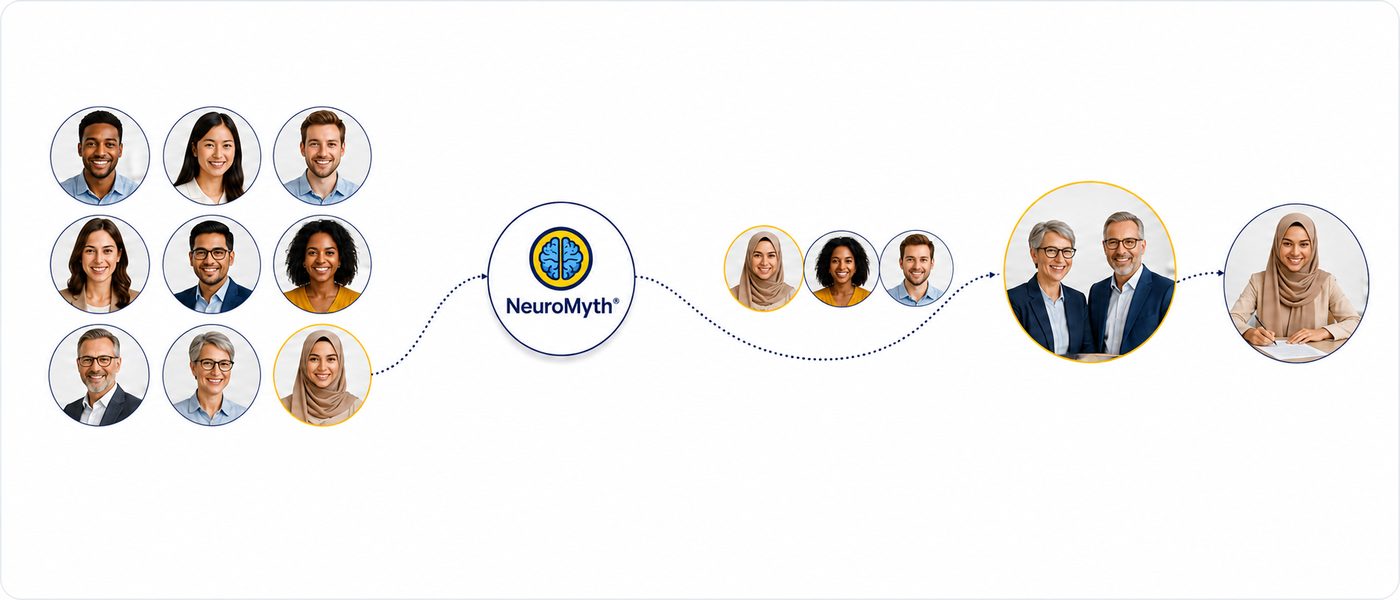
NeuroMyth does not rank people. It maps structural patterns. The analysis is the same regardless of title, background, seniority, or how someone presents themselves. The goal is not to judge — it is to give the organisation the information it needs to make better decisions.
SCR and FIT levels for consistent, uncoachable candidate screening at any volume.
Map how a new hire will interact with an existing team — before the contract is signed.
EXE and ELI depth levels for individual senior appointments where depth is the responsible choice.
Five real assessments — same system, same human reviewer, same output as paying clients. No sales call required. Run them on your next leadership decision.
Get 5 Free TRY →